Checklists & Guides copyright Eligibility
Visa eligibility checklists and guides serve as vital resources for individuals traversing the commonly complicated visa landscape. They clarify the requirements for various visa types, including travel, work, and study. By utilizing these structured frameworks, applicants can simplify their preparation and bypass common mistakes. However, the complexities of each visa category can be daunting. Comprehending these details could be the distinction between approval and denial. What specific elements should prospective applicants concentrate on?
Comprehending Visa Types: What You Need to Know
What aspects establish the suitable visa type for an individual's travel purposes? Several key elements factor in when determining a visa. First, the purpose of travel is crucial; individuals may pursue visas for tourism, business, work, or study. Each purpose has particular visa categories. Second, the duration of stay counts. Some visas are intended for short visits, while others accommodate long-term stays.
Furthermore, the applicant's nationality affects eligibility, as immigration laws fluctuate by country. The destination country's stipulations, including documentation and financial stability, also carry substantial weight.
Furthermore, previous travel history can influence visa approval; countries may assess applicants with previous immigration violations. Lastly, an applicant's age and family situation can determine which visa type is most suitable. Understanding these factors confirms that individuals select the correct visa, aligning their travel objectives with the legal requirements determined by the destination country.
Critical Eligibility Criteria for Study Visas
In the process of applying for study visas, applicants must satisfy specific eligibility standards to ensure their admission into educational institutions. Important requirements include demonstrating acceptance at an accredited academic facility and providing evidence of enough financial support for tuition fees and day-to-day expenses. Understanding these prerequisites is crucial for a successful visa application.
Academic Enrollment Requirements
Even though the particular academic admission standards for study visas can differ by country and institution, various key factors are typically assessed. Applicants typically need to provide proof of prior academic qualifications, such as transcripts and diplomas, showing their suitability for the desired program. Language proficiency is a crucial factor; many institutions request standardized test scores, such as copyright or TOEFL, to confirm students can participate in coursework effectively. Additionally, some programs may call for entrance exams or interviews. Academic references or recommendation letters typically support applications, emphasizing the student's capabilities and potential. Also, meeting application deadlines and adhering to certain documentation criteria is vital for successful admission. Collectively, these standards guarantee that students are adequately prepared for their academic pursuits.
Proof of Financial Resources
To guarantee eligibility for study visas, applicants must demonstrate sufficient financial support, as this is a critical criterion assessed by immigration authorities. Financial evidence typically includes banking records, scholarship offers, or affidavits of support. Applicants should present documentation that demonstrates their ability to cover tuition fees, living expenses, and other related costs during their study period. The required amount may differ depending on the country and institution. Additionally, applicants must ensure that their financial documentation is current and clearly shows available funds. In some cases, a combination of personal savings and sponsorships may be acceptable. Overall, presenting clear and credible financial support evidence is crucial for a successful study visa.
Essential Requirements for Securing a Visa
Getting a visa requires meeting numerous key criteria that differ by country and individual circumstances. Typically, applicants must possess a valid job offer from an employer in the host country, which often necessitates a labor market test to show that no local candidates are available for the position. Additionally, educational qualifications and relevant work experience must align with the job criteria.
Furthermore, individuals may be asked to establish their economic stability to support themselves while living abroad and present documentation including a resume and references. Health screenings and character checks, including police clearance certificates, are frequently required to verify the applicant complies with public health and safety standards. In conclusion, grasping and meeting the particular application processes, such as forms and fees, is crucial for a approved visa submission. Each nation's requirements may diverge, emphasizing the importance of comprehensive research and preparation.
What to Prepare for Family Reunification Visas
When submitting applications for family reunification visas, applicants need to collect a variety of essential documents to substantiate their application. Key documents typically include proof of relationship to the family member based in the destination country, such as marriage certificates or adoption papers. In addition, applicants should provide a valid visa and recent photographs that satisfy specific requirements.
Financial proof is equally important; applicants may need to show that the sponsoring family member can offer sufficient financial support. This can include letters of employment, banking records, and taxation filings.
Furthermore, applicants should submit completed application forms and pay related fees. According to the country, they might also be required to undergo a medical examination or provide police clearance certificates. Guaranteeing that all documents are correct, complete, and correctly organized will facilitate a smoother application process for family reunification visas.
Steering Clear of Typical Errors in Visa Processes
Maneuvering the visa process can be filled with obstacles, and numerous applicants encounter common pitfalls that can delay or compromise their efforts. One common issue is submitting incomplete applications, where absent information can lead to immediate rejections or requests for additional documentation. Moreover, missing deadlines often results in missed opportunities, as processing times can be lengthy.
Incorrect or contradictory information can trigger red flags for immigration officials, potentially compromising one's credibility. Furthermore, neglecting the importance of understanding visa categories might lead applicants to apply for the incorrect type, losing valuable time and resources. Finally, omitting to research specific country requirements can produce inadvertent oversights. By being conscious of these pitfalls and approaching the application process with meticulousness and attention to detail, applicants can greatly boost their chances of a successful visa outcome.
Getting Ready Your Supporting Documents for Visa
Preparing supporting documents for visas is a vital step in the process. Knowing the specific document types necessary, structuring records effectively, and complying with submission guidelines can significantly impact the outcome. This section will outline these essential components to ensure a smooth application experience.
Required Documentation
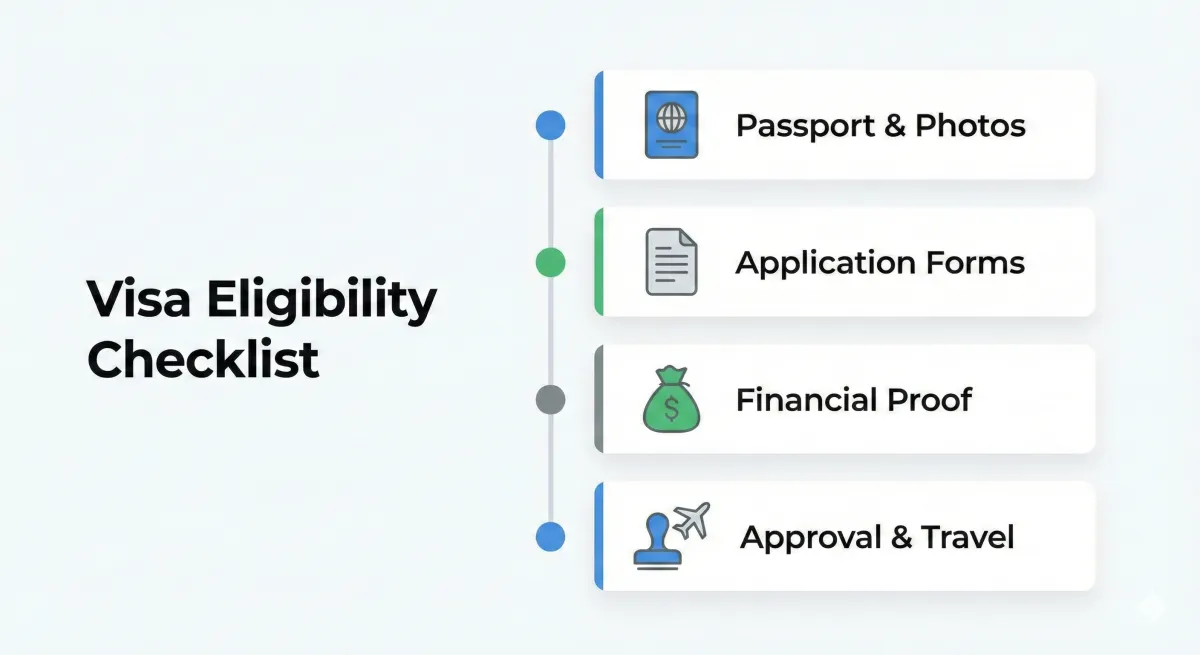
As applicants navigate the complexities of visas, comprehending the exact document types needed is crucial for a positive submission. Typically, applicants must provide a valid visa, which should have at least six months of validity beyond the intended stay. Additionally, photos meeting particular size and background criteria are often needed. Financial documents, such as bank statements or sponsorship letters, may be required to prove the ability to support oneself during the stay. Academic or work verification documents can also play an significant role, particularly for student or worker. Lastly, any forms related to the visa, including the application fee receipt, must be included. Gathering these documents carefully improves the probability of a smooth application process.
Structuring Your Records
A systematically arranged set of records is vital for a successful visa submission. Applicants should commence by creating a detailed checklist of all required documents, ensuring that each item is accounted for and easily accessible. It is advisable to categorize documents into sections, such as identification, financial statements, and proof of relationship, to facilitate quick retrieval. Each document should be clearly labeled and, where necessary, translated into the required language. In addition, maintaining both physical and digital copies can guard against loss or damage. Routinely reviewing and updating records will help guarantee that all information remains accurate and relevant. This systematic approach not only streamlines the application process but also enhances the applicant's overall chances of approval.
Overview of Submission Guidelines
How can applicants make certain their supporting documents comply with the essential standards for visas? They must thoroughly review the submission guidelines provided by the relevant visa authority. Each authority typically outlines specific requirements regarding document types, formats, and acceptable copies. Applicants need to ensure that read now all documents are current, clear, and appropriately translated when needed. It's vital to organize the documents logically, following any specified order, and to include all required forms and fees. Moreover, applicants should retain copies of their submissions for personal reference. Detail-oriented approach is essential, as incomplete or incorrectly formatted documents might lead to delays or denials. By following these guidelines, applicants enhance their likelihood of a successful visa process.
Recommendations for a Smooth Visa Interview Process
While preparing for a visa interview can be a challenging task, grasping essential approaches can significantly improve success prospects. Candidates should begin by thoroughly reviewing their application and supporting documents, making certain they understand all information. Rehearsing typical interview questions can assist in developing self-assurance; mock interviews with a companion might prove helpful.
Additionally, projecting a professional is essential; proper attire can form a favorable first impression. Candidates should show up early to sidestep unnecessary stress and display punctuality. During the interview, straightforward and brief answers are essential. Honesty is essential; any discrepancies can generate red flags.
Last but not least, applicants should remain calm and composed, preserving good eye contact and positive body language. Through applying these methods, applicants can manage the interview process more successfully, substantially boosting their chances of obtaining a visa.
Frequently Asked Questions
What Is the Typical Duration of the Visa Process?
The visa process generally takes anywhere from a period of weeks to months. Factors influencing duration include the type of visa, where the applicant is from, and processing timeframes at the applicable embassy or consulate.
Is It Allowed to Apply for Several Visas at Once?
Individuals may indeed submit applications for multiple visas at the same time; nonetheless, they need to ensure adherence to the particular requirements of each visa. It's important to be aware that receiving approval for one may influence the probability of the other being approved.
What Occurs if My Visa Request Gets Rejected?
When a visa is rejected, the applicant generally obtains a notification outlining the reasons. They may file an appeal, reapply with revised information, or consider alternative visa options determined by their circumstances and eligibility.
Are Applicants Subject to Age Restrictions?
Age requirements copyright applicants fluctuate by nation and visa type. Typically, minors might require parental consent, while older applicants could face alternative criteria. It is essential to examine particular requirements for each visa category.
Can I Modify My Visa Type After Submitting My Application?
Yes, applicants can change their visa type after applying, but this process often requires submitting a new application and may involve additional fees or documentation. Approval is not guaranteed and depends on specific circumstances.